
Posted :
Modified :
Why Is My Ceiling Leaking After Heavy Rain? 6 Possible Causes
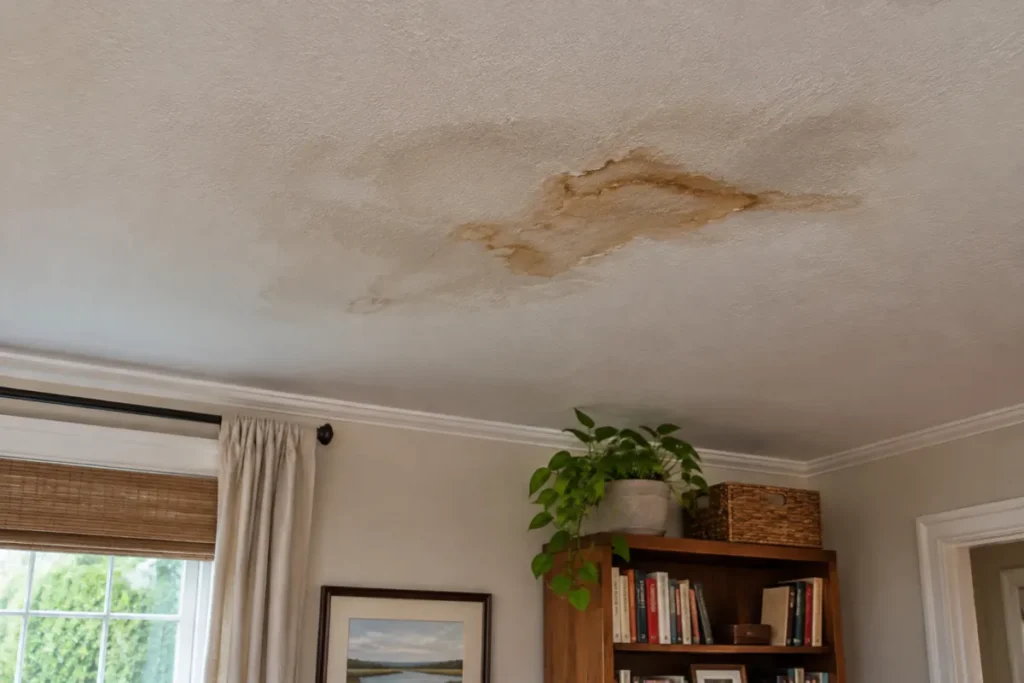
The rain has stopped, but a new brown ring has appeared on your living room ceiling. Or perhaps water starts dripping only when a storm becomes especially intense. Homeowners naturally look straight above the stain and assume that is where the roof is leaking.
It may not be. Water can enter near a chimney or roof vent, move along decking and framing, and become visible several feet away. Some ceiling stains also originate from plumbing, heating or cooling equipment, or interior condensation rather than a roof at all.
The most useful first step is not guessing which shingle to seal. It is distinguishing an urgent interior water problem from its underlying source. Morris County Roofing and Siding explains its diagnostic approach on our roof leak solutions page. Below are six possibilities and the questions that help narrow them down.
What to Do First When Water Is Coming Through the Ceiling
Protect people before belongings. Keep everyone away from a sagging or bulging ceiling, which can release water or damaged material without warning. If water is near wiring, a ceiling fixture, outlets, or a breaker panel, avoid touching affected electrical equipment and contact an appropriate qualified professional. Do not enter a wet attic or climb onto a roof during a storm.
If it is safe, move valuables, catch drips in a container, photograph the stain and surrounding area, and record when the leak started. Call for professional help promptly if water is actively entering, spreading, or damaging the interior. If the ceiling appears unstable, keep clear of the area and get emergency assistance appropriate to the hazard.
A tarp or surface coating may appear to stop a drip temporarily, but it can conceal the true entry point. Roof access and emergency waterproofing belong with properly equipped professionals, especially in wind or rain.
Call Now: 862-391-1619 or Get a Free Estimate Today. Owner responds to all inquiries promptly.
Six Reasons a Ceiling May Leak After Heavy Rain
1. Damaged or Incorrectly Installed Flashing
Flashing is the metal or other weatherproofing detail used where roofing meets a chimney, wall, skylight, or penetration. Rainwater can exploit loose flashing, deteriorated sealant, poorly integrated materials, or an installation that never directed water correctly. These problems may produce a leak only under certain rain directions or intensities.
A professional should examine how water is supposed to shed across that intersection, not simply add another bead of caulk. A durable fix depends on correcting the detail that is failing. If the surrounding roof is serviceable, a localized repair may be sufficient.
2. Worn, Missing, or Wind-Damaged Shingles
Shingles can be lifted by wind, broken by impact, or deteriorated over time. During a hard storm, exposed underlying areas may allow water to reach the roof assembly. Missing shingles also make the roof vulnerable to subsequent rain, even if the first storm produced no visible indoor stain.
What matters is not just the number of shingles missing. The condition of adjacent material, the location of the opening, and any underlying damage help determine the correct response. A roof showing wear across several slopes may require a different conversation from one with a few storm-damaged pieces.
3. Leaks Around Plumbing Vents or Other Roof Penetrations
Pipes and vents passing through a roof require properly installed flashing or boots. Rubber components can deteriorate, metal parts can loosen, and water may enter where materials separate. A nearby ceiling stain can therefore appear even when the shingles themselves look generally healthy.
The challenge is to inspect the whole penetration assembly, including how upper shingles overlap the flashing. Sealing only the visible gap is not always the durable solution. Ask what component failed and whether the repair restores the intended drainage path.
4. Roof Valleys Where Water Concentrates
A valley is the channel formed where two roof planes intersect. During heavy rain, substantial water runs through it. Debris, damaged shingles, inadequate valley detailing, or wear in this high-flow area can create a leak that does not appear during a light shower.
Homes surrounded by mature trees may collect leaves and small branches in valleys. A contractor should assess whether debris merely needs safe removal or whether the valley materials and surrounding roof require repair. Homeowners should never attempt to clear a steep or wet roof themselves.
5. Wind-Driven Rain Entering at a Vulnerable Transition
Some leaks appear only when wind blows rain sideways. Strong gusts can drive water toward roof-to-wall intersections, siding details, and flashing transitions that behave differently in calm rain. Water may enter through a wall assembly or opening and travel to a ceiling, making it appear to be a shingle leak.
This is why it helps to record which direction the storm came from and whether the stain occurs only under windy conditions. The diagnosis may need to look beyond the visible roof surface and consider exterior wall connections, too.
6. The Stain Is Not Caused by the Roof
Not every ceiling stain is a roofing defect. Upstairs plumbing, a bathroom fixture, a condensate drain from HVAC equipment, or warm moist air condensing on cold surfaces can produce similar marks. A stain that appears during rain is suggestive, but the timing alone is not conclusive.
A useful investigation checks evidence and rules out plausible alternatives. If the ceiling is under a bathroom, for example, a plumber may need to evaluate nearby supply or drain lines. If dampness appears in cold weather without precipitation, insulation, air leakage, and condensation deserve attention.
Seeing a new stain or active drip? Get a Free Estimate Today or call 862-391-1619 to discuss roof leak diagnosis. Owner responds to all inquiries promptly.
Why the Ceiling Stain Usually Does Not Point to the Exact Leak
Water follows gravity, but it also follows materials. Once water enters an assembly, it can move along the underside of decking, across rafters, down a pipe, or over drywall before reaching a visible low point. The stain may emerge far from the entry location.
Consider a hypothetical home with a chimney near the roof ridge and a stain closer to an outside wall. It may be tempting to replace the shingles immediately above the stain. Yet rain entering at the chimney might travel along framing and show up much farther downslope. A repair at the stain’s vertical location would miss the real failure.
That is why a roof leak investigation should include the pattern of moisture, likely entry points, attic access where available, and external conditions. Photographs of both the visible damage and suspected source are especially useful when evaluating a proposed repair.
What a Professional Leak Evaluation Should Include
An effective evaluation starts with the homeowner’s observations. Did the leak begin during the first minutes of rain or only after several hours? Was there wind? Has the stain grown? Did a previous contractor repair anything in the same area? Is there evidence in the attic?
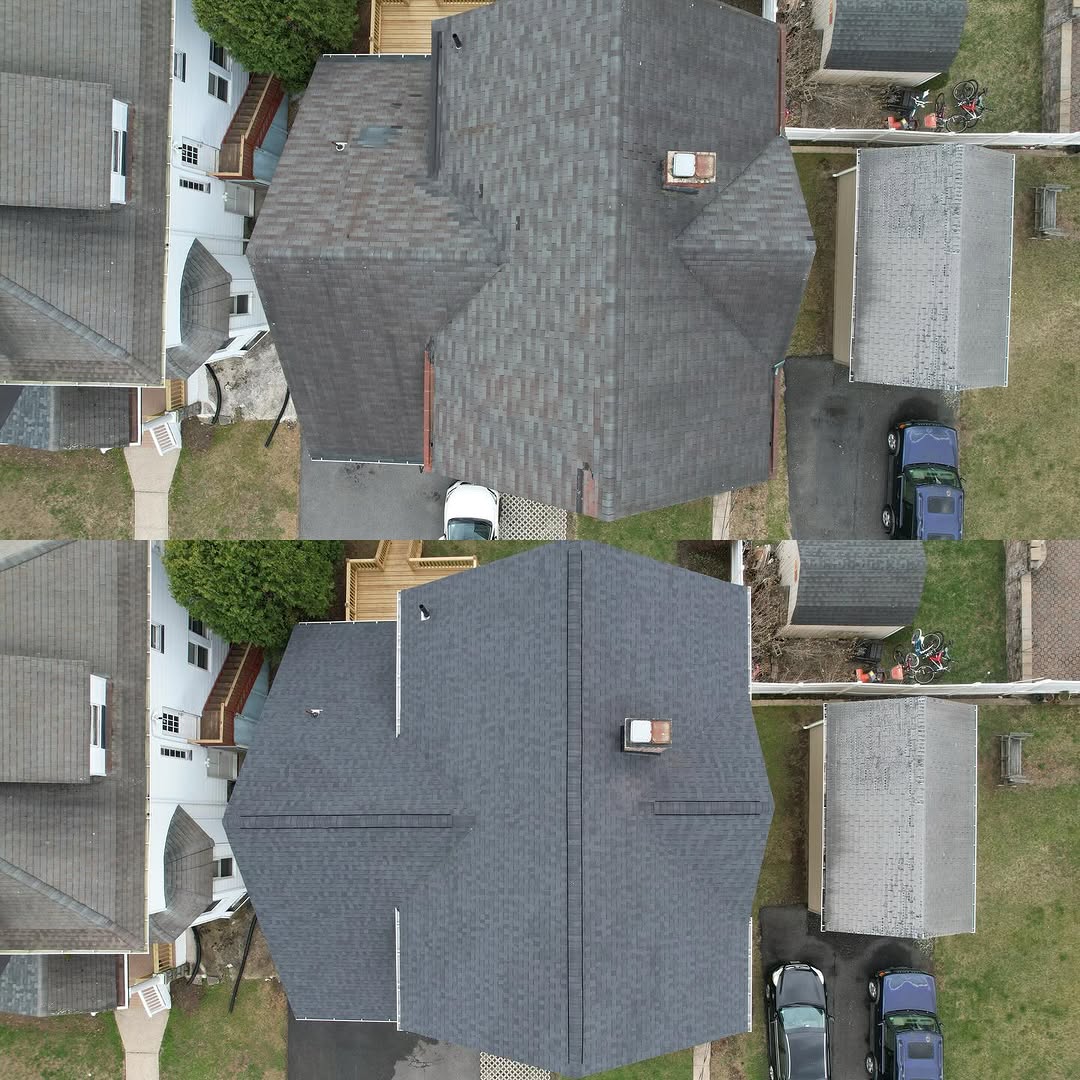
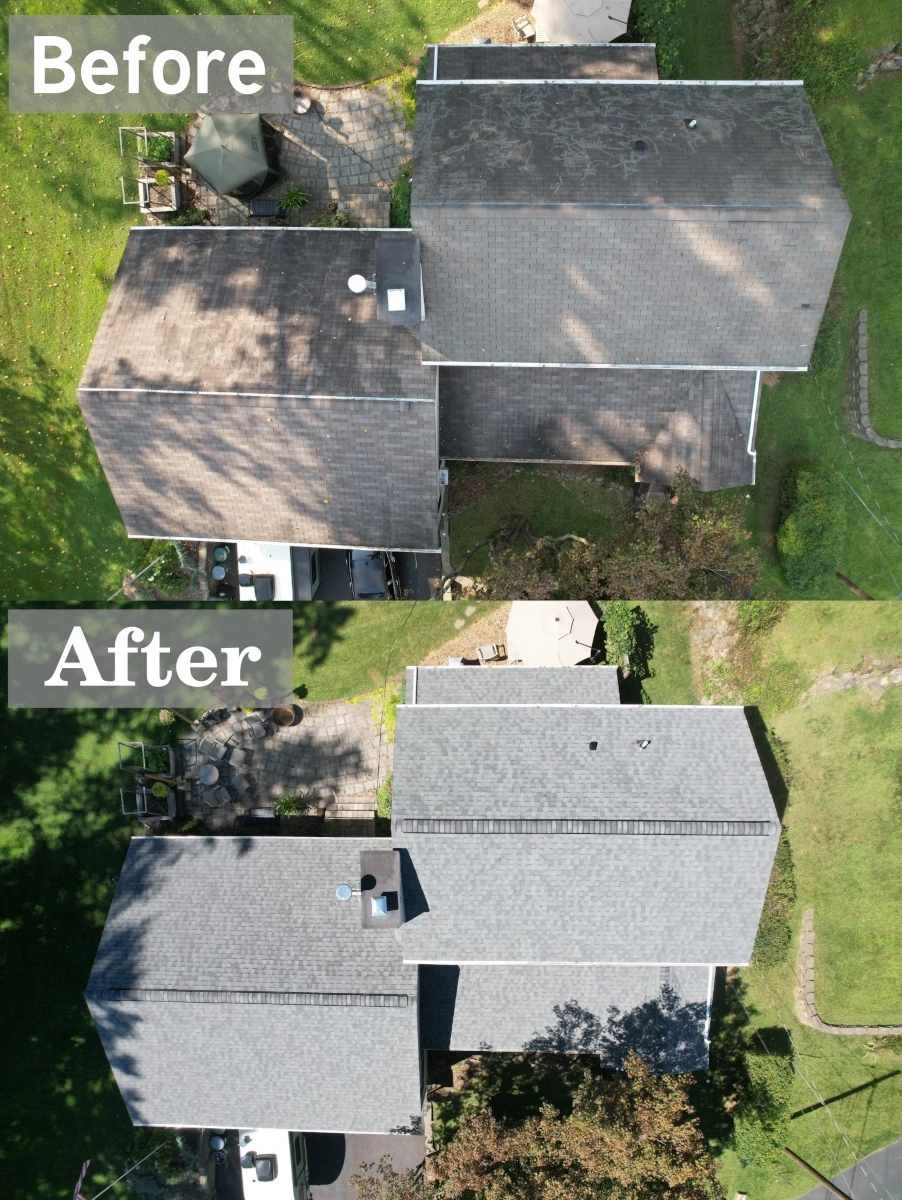
The exterior inspection can then consider shingles, flashing, valleys, penetrations, and roof transitions. When access and conditions permit, attic observations may help reveal damp insulation, stained framing, or other evidence of water travel. MOCO’s leak service describes using roof inspections and visual documentation to identify potential trouble spots. A drone view can show exterior details, but should not be treated as proof of a concealed leak path on its own.
The homeowner should receive an explanation of what appears to be failing, what repair is proposed, and which findings remain uncertain. Some leaks are intermittent and require more than one observation. A credible diagnosis can identify uncertainty rather than offer a false guarantee based on one photograph.
Can You Wait Until the Next Rainstorm?
A stain that feels dry today can reflect damage that returns during the next storm. Water exposure may affect drywall, insulation, wood, and finishes even when no water is actively dripping. The safer approach is to document and evaluate a suspected leak promptly, rather than wait for a larger stain as confirmation.
The urgency depends on what is happening. Active dripping, a sagging ceiling, electrical exposure, or quickly spreading dampness requires immediate caution and professional attention. A small old stain that has not changed may be less urgent, but it still warrants investigation before more rain arrives.
When a Leak Repair Makes Sense and When Replacement Enters the Discussion
A leak at an isolated vent boot or chimney detail may be repairable if surrounding shingles and roof components remain serviceable. Replacing an entire roof to correct a contained defect could be unnecessary. But if shingles are brittle across the roof, leaks have appeared in several places, or underlying materials are failing, patching one area may not provide durable protection.
MOCO’s roof leak solutions can help homeowners understand the cause of water entry. If evaluation instead reveals broad deterioration, its roof replacement service explains the larger project. The decision should follow findings, not the size of the stain.
Morris County Weather Makes Leak Patterns Worth Tracking
Northern New Jersey can experience soaking rain, sudden downpours, thunderstorms with strong winds, and winter precipitation. Tree-covered properties may accumulate leaves in roof valleys. Older houses may have complicated flashing transitions or multiple additions where roof slopes meet walls.
Those factors do not prove a particular defect. They do explain why a leak may appear during a narrow combination of conditions and remain invisible at other times. Providing a contractor with storm timing, indoor photos, and previous repair history can speed an informed assessment.
Do Not Just Cover the Stain. Find the Source.
Painting over a ceiling mark before confirming that the water entry has stopped can hide evidence and lead to repeated interior repairs. Correct the source, allow affected materials to dry, and determine whether professional water-damage restoration or other work is needed before refinishing.
Morris County Roofing and Siding can help evaluate suspected roof-related water intrusion and explain appropriate next steps. Call Now: 862-391-1619. Get a Free Estimate Today. Owner responds to all inquiries promptly.
Frequently Asked Questions
Why does my ceiling leak only during very heavy rain?
High water volume or wind-driven rain may expose weak flashing, valleys, penetrations, or roof-to-wall transitions that do not leak during lighter showers.
Can water travel before showing up on a ceiling?
Yes. Water may follow framing, decking, pipes, or other surfaces and emerge away from the actual entry point.
Does a brown ceiling stain prove the roof is leaking?
No. Plumbing or HVAC condensate issues can also create stains. The source needs to be investigated.
Should I get on the roof to find a leak?
No. Wet, icy, or steep roofs are dangerous. Document interior symptoms from a safe location and arrange a qualified inspection.
Is a small leak an emergency?
Active or rapidly spreading water intrusion warrants prompt attention. Sagging ceilings and water near electrical equipment present additional hazards and should be treated as urgent.
Can one leaky vent require a whole new roof?
Often not. If the defect is localized and surrounding roofing remains sound, a targeted repair may be appropriate. The whole roof should still be assessed.
Call Now: 862-391-1619 or Get a Free Estimate Today. Owner responds to all inquiries promptly.
Owner Jonathan Hargadon

As owner of Morris County Roofing and Siding and a proud Rockaway local with over 10 years of industry experience. He personally handles customer calls and estimates, ensuring every homeowner gets honest pricing and quality work. What sets Jonathan apart is his direct approach he answers calls himself, provides estimates, and stays involved from start to finish. Whether it’s a full replacement or a small repair, every project is treated with the same level of care, attention to detail, and commitment to reliable results you can trust.
Latest Blogs by Jon
From Owner to fellow resident thank you for your time!